IICRC certification means a technician has completed standardized training in the science of water, fire, or mold damage — and passed an exam to prove it. It’s the restoration industry’s equivalent of a contractor’s license: not every state requires it, but its absence is a red flag worth noticing before you hand someone the keys to your home.
What the IICRC Actually Is
The Institute of Inspection, Cleaning and Restoration Certification (IICRC) is a nonprofit standards body that has been setting technical benchmarks for the restoration industry since 1972. It doesn’t manufacture equipment or run a franchise — it writes the rulebooks that govern how water damage, mold, and fire jobs should be handled, and it trains and tests the technicians who follow them.
The most recognized credential is the WRT (Water Damage Restoration Technician) certification, but the IICRC also issues credentials for applied microbial remediation (AMRT), fire and smoke restoration (FSRT), applied structural drying (ASD), and a dozen other specialties. A company that carries multiple certifications across its crew isn’t padding a resume — it’s signaling that different technicians have been trained for different phases of a job.
The IICRC also publishes the S500 Standard for Professional Water Damage Restoration and the S520 Standard for Professional Mold Remediation — the documents that define what “done correctly” looks like. Insurance adjusters, building inspectors, and attorneys refer to these standards when disputes arise. If a contractor doesn’t know what the S500 is, that’s worth knowing.
What Certification Actually Requires
Getting IICRC-certified isn’t a one-afternoon online quiz. Candidates complete coursework covering psychrometrics (the physics of drying air and materials), moisture mapping, contamination categories, and equipment use. They then pass a proctored exam. After that, they’re required to earn continuing education credits to maintain the credential — the science of structural drying evolves, and the IICRC expects certified technicians to keep up.
There are two levels to pay attention to:
- Certified Firm: The company itself is registered with the IICRC, carries proper insurance, and employs at least one certified technician. This is the baseline.
- Individual Certification: Specific technicians hold credentials in their area of expertise. On a water damage job, you want the person running the drying equipment to hold a WRT or ASD, not just the owner back at the office.
When you’re vetting a contractor, ask both questions: Is the firm certified? And which certifications does the technician who will actually be in my home hold?
Why It Matters on a Real Job
Here’s where certification stops being abstract. Consider three common scenarios:
A pipe bursts under a bathroom vanity. An uncertified crew might pull the wet cabinet, run a fan for a few days, and call it dry. A certified technician will use a moisture meter and thermal imaging camera to map how far water has wicked into the subfloor and wall cavity — because water travels, and what looks dry on the surface is often still saturated two inches in. Drying to IICRC standards means hitting specific moisture content targets in wood and drywall before anything gets closed up. Skip that step, and mold colonizes within 24–72 hours in San Diego’s coastal humidity.
Smoke damage after a kitchen fire. Smoke residue isn’t just a smell — it’s acidic, and it continues etching surfaces long after the flames are out. IICRC’s FSRT training covers the chemistry of different smoke types (wet smoke from smoldering fires behaves very differently from dry smoke from fast-burning fires) and the cleaning agents and techniques appropriate for each. A crew without that training may clean what’s visible and miss the residue that has already migrated into HVAC ductwork.
A slow roof leak discovered months later. By the time you see the stain on the ceiling, mold may already be established in the attic or wall cavity above it. IICRC’s AMRT certification trains technicians to assess microbial growth, contain it properly, and remediate to a standard that can be verified with post-clearance testing. That documentation matters if you’re filing an insurance claim or selling the property.
In each case, the certification isn’t a trophy — it’s evidence that the technician understands the failure modes of doing the job wrong.
How to Verify a Contractor’s Certification
Don’t take a company’s word for it. The IICRC maintains a public directory at iicrc.org where you can search by company name or zip code and confirm both firm registration and individual credentials. It takes about 60 seconds.
When you call a restoration company after a loss, ask:
- Is your firm an IICRC Certified Firm?
- Which certifications does the technician responding to my job hold?
- Can you provide your certification numbers so I can verify them?
A legitimate company will answer all three without hesitation. If the response is vague — “we follow industry standards” or “our guys are trained” — press for specifics. “Trained” and “certified” are not the same thing.
Also check that the company carries general liability insurance and workers’ compensation. Certification without insurance means that if a technician damages your flooring or is injured on the job, you may be exposed. These two things go together.
What Certification Doesn’t Guarantee
Certification is a floor, not a ceiling. It tells you a technician has met a minimum technical standard — it doesn’t tell you they’ll communicate well, show up on time, or handle your insurance paperwork accurately. You still need to read reviews, check licensing with the California Contractors State License Board (CSLB), and get a written scope of work before any job starts.
It’s also worth knowing that IICRC certification is specific to restoration work. A general contractor who handles remodels may be excellent at their craft and completely unprepared for the drying science, contamination protocols, and documentation requirements of a water or mold job. These are different disciplines.
Finally, certification doesn’t make a company immune to cutting corners under time pressure or when a job gets complicated. That’s why the written scope of work, daily moisture logs, and post-remediation verification (clearance testing on mold jobs) matter — they create a paper trail that holds the contractor accountable to the standard they’re certified in.
When You’re Ready to Move Forward
If you’re reading this because you’re dealing with water damage, mold, or smoke right now — not just researching — the next step is getting a certified technician on-site quickly. Moisture damage compounds fast: the difference between a 24-hour response and a 72-hour response can be the difference between drying out a subfloor and replacing it.
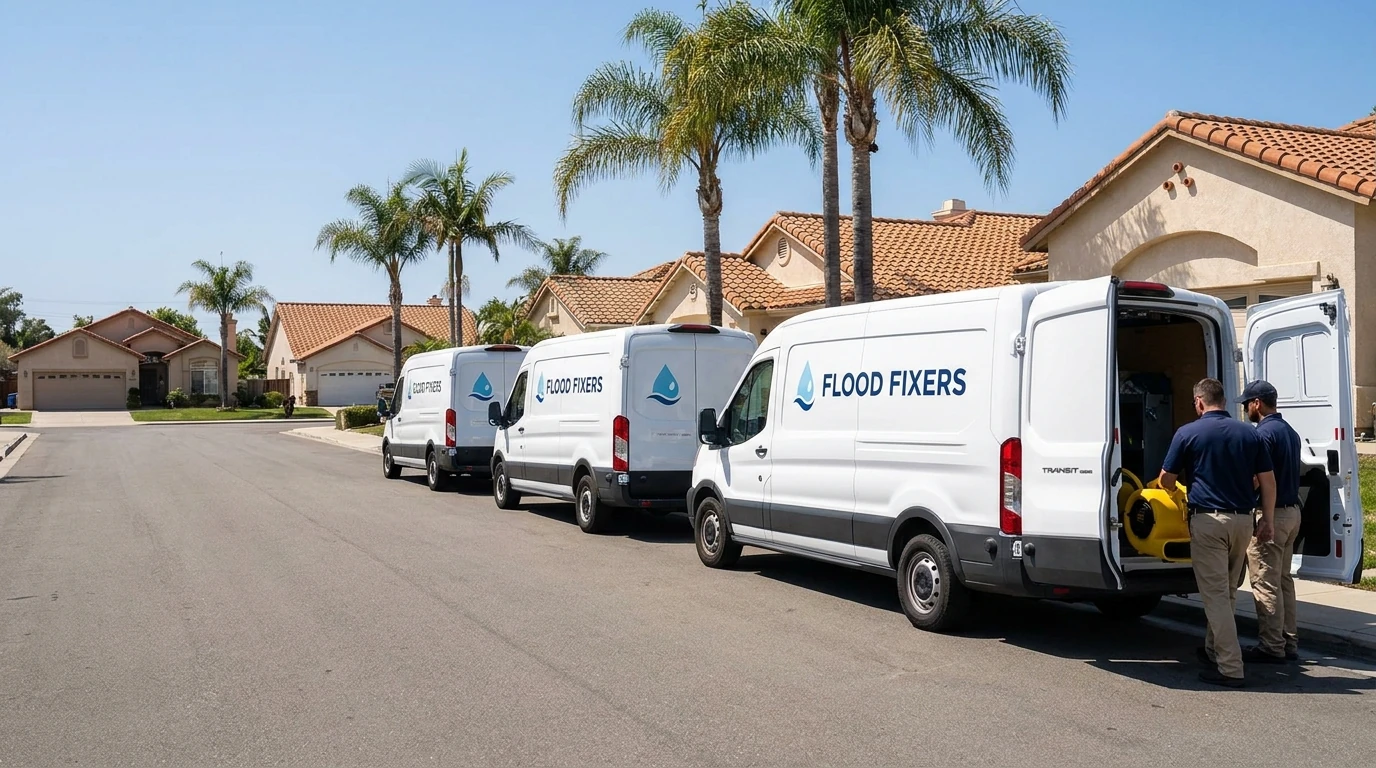
Flood Fixers is an IICRC Certified Firm serving San Diego and the surrounding region. If you have questions about a specific situation or want to talk through what a job might involve before committing to anything, call (855) 204-1124. There’s no obligation in asking.