
If a pipe just burst in your home, here’s what to do right now: shut off the main water supply, cut power to any affected rooms at the breaker, and start documenting with your phone camera before you touch anything. Those three actions in the first five minutes will limit damage, protect you from electrical hazards, and preserve your insurance claim. Everything else — drying, repairs, mold prevention — comes after.
Step 1: Stop the Water (and the Electricity)
Your main water shutoff is usually one of three places: under the kitchen sink, in a utility closet near the water heater, or on an exterior wall in the garage. In older San Diego homes — especially craftsman bungalows in North Park or mid-century ranches in El Cajon — it’s sometimes buried in a ground-level box near the front curb with a metal lid. If you don’t know where yours is, find it today, before an emergency.
Once you’ve turned the valve clockwise until it stops, open a cold-water faucet on the lowest floor to drain pressure from the lines. This slows the flow of any water still moving through the system.
Next, go to your electrical panel. Water and electricity share walls in every home, and a burst pipe behind drywall can saturate insulation that sits inches from a circuit. If the affected area includes a kitchen, bathroom, laundry room, or finished basement, flip those breakers before you wade in. Don’t assume a dry-looking floor means the wiring is safe.
Step 2: Document Before You Clean Up
Insurance adjusters work from evidence. Walk through every affected room and shoot video — not just photos — panning slowly across standing water, wet walls, buckled flooring, and any visible pipe damage. Open cabinet doors under sinks and capture what’s inside. If water has reached furniture, appliances, or personal property, document those too.
Note the time and date in the video by saying it out loud. If you have a recent home inventory or receipts for flooring and cabinetry, pull those now — you’ll need them later.
Don’t throw anything away yet. Wet insulation, soaked drywall, even ruined carpet can be part of a legitimate claim. Your adjuster or a restoration contractor can help you determine what’s salvageable versus what needs to go.
Step 3: The Immediate Checklist
Once the water is off and you’ve documented the scene, work through this in order:
- Locate the burst pipe. Check under sinks, behind the washing machine, along exterior walls, and in any unheated spaces like a garage or crawl space. In San Diego, hard freezes are rare — but a cold snap in January can still freeze pipes in uninsulated attic runs or on north-facing exterior walls.
- Remove standing water if it’s safe to do so. A wet-dry shop vac handles small amounts. Towels and mops work for thin films. Do not use a standard household vacuum.
- Move wet items out of the water. Furniture legs sitting in water will wick moisture up into the wood. Rugs trap water against hardwood and subfloor. Get them up and out.
- Open windows and run fans if the outdoor humidity allows. San Diego’s coastal air can run 70–80% humidity in June and July — on those days, outside air may actually slow drying. In dry Santa Ana conditions, open everything.
- Call your insurance company. Most policies require prompt notification. Get a claim number before any major work begins.
What NOT to Do After a Pipe Bursts
A few common mistakes that turn a manageable water loss into a much bigger problem:
- Don’t use a hair dryer or space heater to dry wet walls. Surface drying without structural drying traps moisture inside wall cavities. Mold can begin colonizing wet drywall and insulation within 24–48 hours under the right temperature conditions — and San Diego’s mild climate is often exactly right.
- Don’t skip the subfloor. Hardwood and laminate floors can look fine on top while the subfloor underneath holds standing water. If you step on a floor and feel any give or hear a squishing sound, the subfloor is wet.
- Don’t assume the pipe was the only source. A burst supply line sometimes happens because water pressure spiked — which means other connections in the house are under stress too. Check washing machine hoses, the icemaker line, and toilet supply lines while you’re at it.
- Don’t delay more than 48 hours on professional drying. What starts as a water damage claim can become a mold remediation claim if structural moisture isn’t addressed quickly. Those are handled differently by insurance and cost significantly more.
When to Call a Water Damage Professional
You can handle a small appliance leak — a dishwasher supply line drip that soaked one cabinet — with towels, a fan, and a few days of monitoring. A burst pipe is a different situation.
Call a professional when:
- Water has spread beyond one room or one floor
- The leak source is inside a wall, ceiling, or under a slab
- You can smell anything musty within 24 hours of the event (that’s fast mold growth, and it means conditions were already favorable)
- The affected area includes a bathroom, kitchen, or laundry room where water reached cabinetry, subfloor, or insulation
- Your insurance company requires a certified assessment before they’ll process the claim
IICRC-certified water damage restoration technicians use moisture meters and thermal imaging cameras to find water you can’t see. They’ll map the full extent of saturation before setting industrial air movers and dehumidifiers — equipment that pulls dramatically more moisture out of a structure than household fans. The drying process typically takes three to five days with professional equipment; it can take weeks without it, and the mold risk compounds daily.
If the pipe burst was connected to an appliance — a washing machine supply hose, a refrigerator icemaker line, or a dishwasher fitting — that falls under appliance leak cleanup, which follows the same drying protocol but may involve different insurance documentation.
The Recovery Timeline: What Comes After Drying
Once structural moisture readings return to normal (your restoration contractor will confirm this with a final moisture map), the repair phase begins:
- Week 1–2: Drywall replacement, insulation reinstallation, subfloor repairs if needed
- Week 2–3: Flooring reinstallation, cabinet repairs or replacement, painting
- Week 3–4: Final inspections, punch list items, insurance close-out documentation
Timelines stretch when materials are backordered, when hidden damage is found during demolition, or when the insurance process moves slowly. In San Diego, tile and hardwood flooring are common — both require acclimation time before installation, which adds a few days to the schedule.
Keep every receipt, every contractor invoice, and every communication with your insurance company in a single folder — physical or digital. If the claim becomes disputed, documentation is your only leverage.
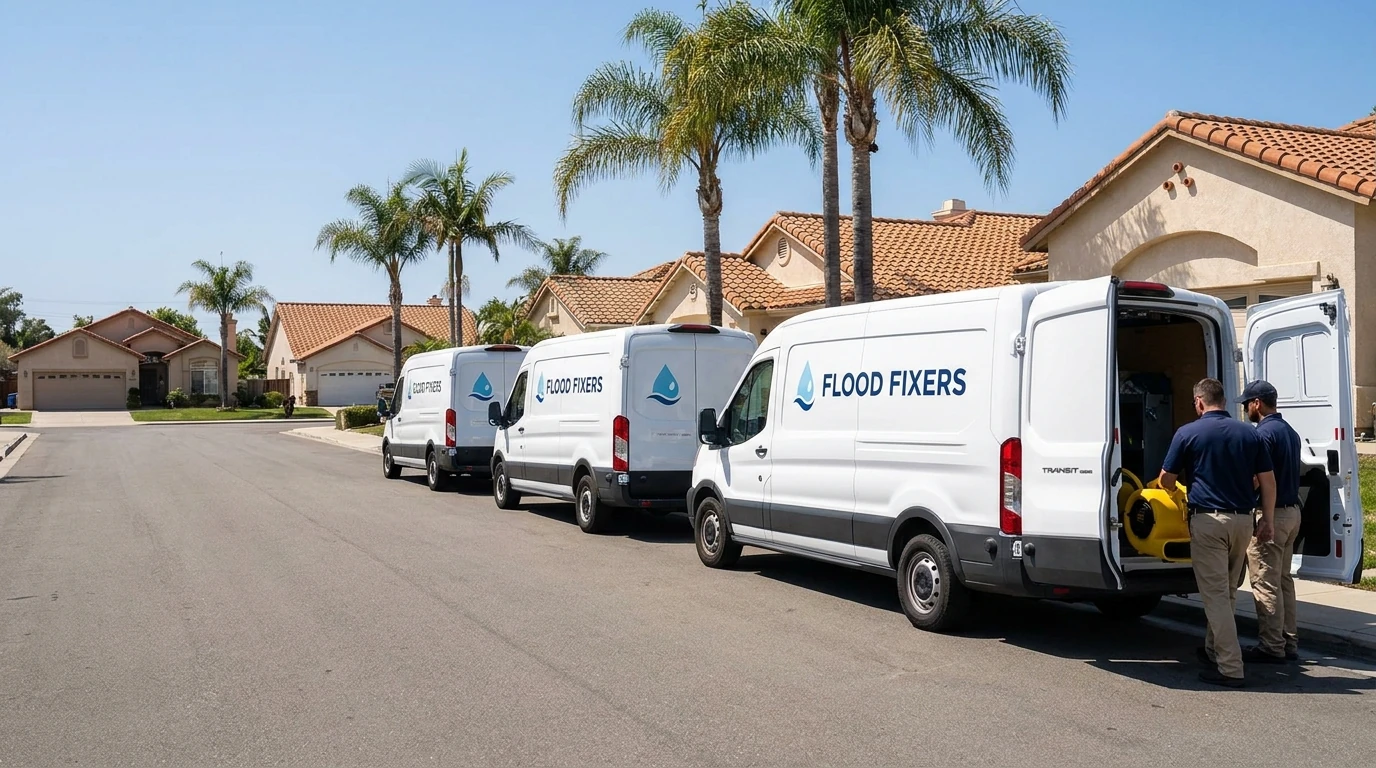
If your pipe has already burst and you’re past the first-response stage, or if you’re not sure whether the damage you’re looking at warrants professional drying, Flood Fixers responds to water emergencies throughout San Diego County. Call (855) 204-1124 — a technician can walk you through what you’re seeing over the phone and tell you honestly whether it’s something you can manage yourself or whether moisture mapping and structural drying are the right next step.
Video Transcript
A pipe just burst in your home. Don’t panic. The next five minutes decide how bad the damage gets. Here’s exactly what to do. First, shut off your main water supply. Turn the valve clockwise until it stops. Then open a cold faucet downstairs to drain remaining pressure from the lines. Next, go straight to your breaker box. Water soaks insulation inches from live wiring. Flip every breaker for the affected rooms before you step into standing water. Before you clean anything, grab your phone and record video. Pan slowly across wet floors, walls, and damaged pipes. Say the date and time out loud. Adjusters work from evidence. Remove standing water safely. A wet-dry shop vac works for small amounts. Never use a regular household vacuum. Get soaked rugs and furniture legs up off the floor immediately. Don’t use a hair dryer on wet walls. That just dries the surface while trapping moisture inside. Mold can start growing in wet drywall within 24 to 48 hours. Professional contractors use moisture meters and thermal cameras to find water hidden inside walls and under floors — water you simply cannot see from the surface. If water spread beyond one room, call a professional today — not tomorrow. Call Flood Fixers at 855-204-1124 for a free estimate. Fast response saves your home.