
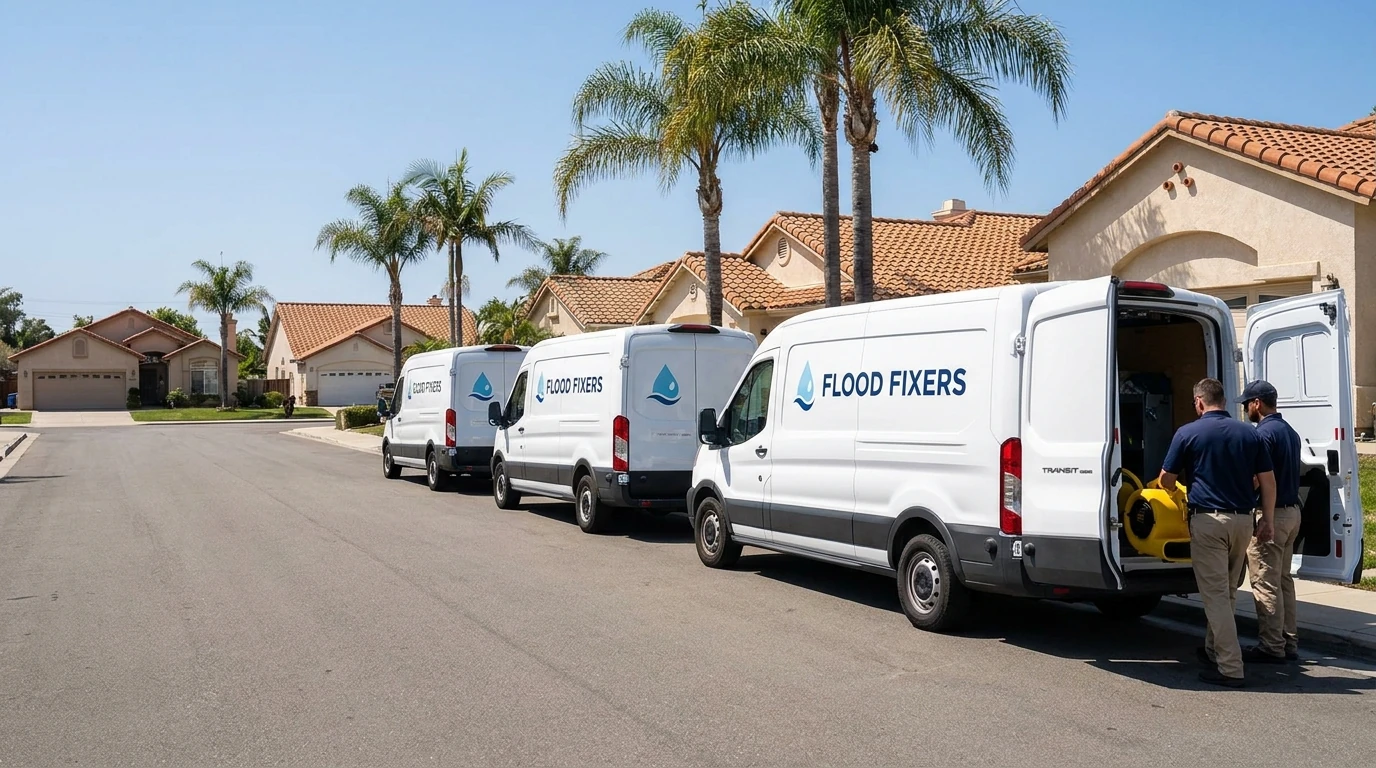
Most water damage restoration takes 3 to 5 days for straightforward cases — a burst pipe caught quickly, a washing machine overflow on a tile floor. Add drywall, insulation, or subfloor damage and you’re looking at 1 to 2 weeks. If mold has already started (it can colonize in as little as 24 to 48 hours after saturation), or if structural framing is involved, the full process can stretch to 3 to 4 weeks or longer. The single biggest factor isn’t the size of the flood — it’s how fast the water was extracted and drying equipment was deployed.
The Four Phases of Restoration and How Long Each One Takes
Understanding the timeline means understanding that restoration isn’t one job — it’s a sequence of jobs, and each phase has to finish before the next can start.
Phase 1: Water Extraction (Hours 1–6)
This is the race. Every hour standing water sits on wood, drywall, or carpet backing, it’s wicking deeper into the material and raising the moisture content of anything it touches. A professional crew uses truck-mounted or portable extractors that pull hundreds of gallons per hour — far more than a wet-vac or mop ever could.
If you’re waiting on a crew, you can slow the damage: turn off the water source if it’s still running, move furniture off wet carpet onto dry ground or aluminum foil squares (to prevent furniture stains from bleeding into the floor), and open windows if outdoor humidity is lower than indoor humidity. Don’t run ceiling fans over a ceiling that may be holding water — a saturated drywall ceiling can collapse.
Phase 2: Structural Drying (Days 2–5, Sometimes Longer)
This is the phase most homeowners underestimate. Once visible water is gone, the materials that absorbed it still hold moisture — sometimes a lot of it. Industrial air movers and dehumidifiers run continuously, and a technician measures moisture readings in the walls, subfloor, and ceiling with a pin or pinless moisture meter every day.
Drying is done when the readings return to normal dry standard (NDS) for that material type, not when things feel dry to the touch. Wood flooring that reads 15% moisture content might feel fine underfoot but will cup or buckle within weeks if sealed back up. In San Diego, the relatively low ambient humidity (typically 60–70% in coastal neighborhoods, lower inland) actually helps drying times compared to humid climates — but homes with poor ventilation or crawl spaces can still trap moisture stubbornly.
Expect 3 to 5 days of active drying for Category 1 water (clean supply line) in a single room. Category 2 (gray water — dishwasher, washing machine) or Category 3 (sewage, floodwater) requires more aggressive drying and often material removal, which adds time.
Phase 3: Demolition and Mold Prevention (Days 3–10, If Needed)
If moisture readings don’t drop as expected, or if water was contaminated, wet materials usually have to come out. This means cutting drywall to the flood cut line (typically 12 to 16 inches above the water line, where moisture stopped wicking), pulling saturated insulation, and sometimes removing baseboards, flooring, or even sections of subfloor.
This isn’t destruction for its own sake — it’s the only way to dry the cavity behind the wall and prevent mold from establishing in a place you can’t see or smell until it’s a much bigger problem. If you see a dark stain spreading along a baseboard, or smell something musty within a few days of a water event, mold testing and remediation may need to happen before reconstruction can begin. That adds another 1 to 5 days depending on the extent.
Phase 4: Reconstruction (Days 7–30+)
Once the structure is dry and cleared, rebuilding begins: new drywall, insulation, flooring, paint, trim, cabinetry if affected. This phase is entirely dependent on the scope of damage, material lead times, and permit requirements. A single bathroom with replaced drywall and flooring might take a week. A kitchen with water-damaged cabinets and subfloor could take three to four weeks, especially if custom materials are involved.
This is also the phase most affected by insurance timelines. Adjusters need to inspect, estimates need approval, and supplements (additional damage found during demo) need to be negotiated. Working with a restoration contractor experienced in direct insurance billing — one who can document moisture readings, photos, and scope of work in the format adjusters expect — can shorten this phase significantly.
What Slows a Restoration Down
A few factors consistently stretch timelines beyond the estimates above:
- Hidden water pathways. Water follows gravity and finds gaps — it travels along pipes, through wall cavities, under flooring, into adjacent rooms. A leak in a second-floor bathroom can show up in a first-floor ceiling two rooms away. Each affected area adds drying time.
- Older construction. Many San Diego homes built before 1980 have denser wall assemblies, older insulation types, or construction methods that trap moisture more stubbornly.
- Delayed response. Every 24 hours of delay before professional drying equipment is running adds roughly a day or more to the drying phase — and raises the probability of mold remediation being needed.
- Insurance documentation gaps. Restoration can’t begin reconstruction until damage is documented and approved. Incomplete or poorly formatted documentation is one of the most common causes of project delays.
What You Should Not Do While Waiting
- Don’t use a household dehumidifier as a substitute for professional drying equipment. A residential unit removes a few pints of water per day. Industrial dehumidifiers remove 30 to 150 pints per day. The math matters.
- Don’t repaint or re-floor over wet materials. Sealing moisture in is how you get mold behind walls six months later.
- Don’t assume it’s dry because it looks dry. Drywall and wood can look and feel dry on the surface while holding 20%+ moisture in the core.
- Don’t run HVAC if sewage or floodwater was involved. Contaminated water can coat ductwork and distribute pathogens through the house.
When the Timeline Is Urgent: Signs You Need a Professional Today
Some situations can’t wait for a Monday morning call:
- Standing water more than a quarter inch deep over any significant area
- Water near an electrical panel, outlets, or appliances
- Any involvement of sewage or outdoor floodwater
- A musty smell that appeared within 48 hours of a water event
- Visible ceiling sag or discoloration suggesting water is pooling above
If any of these apply, the timeline math changes — the cost of waiting an extra few hours is measured in additional material replacement and potential health hazards, not just inconvenience.
The Bottom Line
The honest answer to how long this takes is: it depends on how fast you act and what the water touched. A clean water leak caught in the first few hours, in a room with hard flooring and no wall penetration, can be fully dried in 3 days. The same leak left over a weekend in a carpeted room with drywall can become a 2-week project with mold remediation attached.
If you’re in San Diego and you’re trying to figure out whether what you’re dealing with is a DIY situation or something that needs professional equipment and documentation, Flood Fixers offers free assessments and can have a technician on-site within hours — not days. Call (855) 204-1124 any time, or visit the water damage restoration page to understand what the full process looks like.