
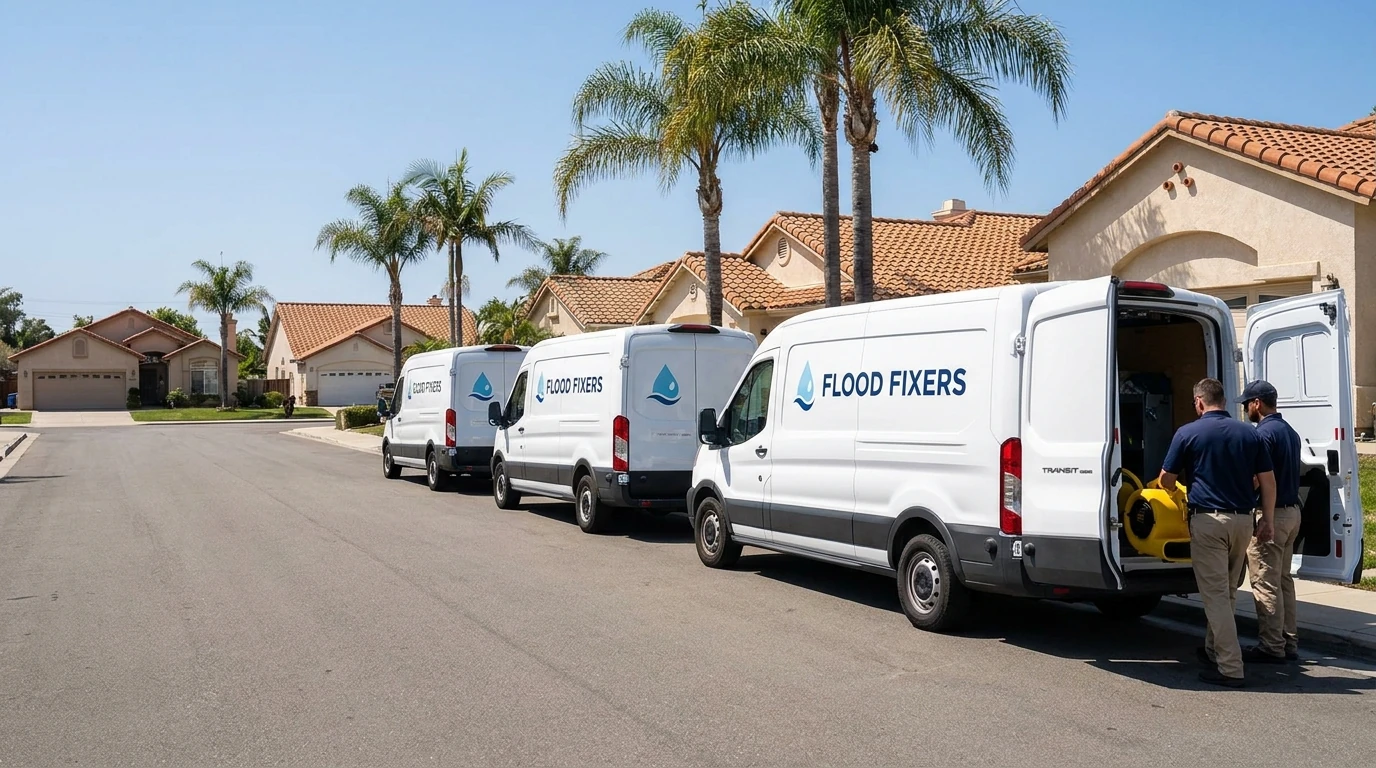
Most San Diego basements flood the same way: a slow problem that looked manageable until it wasn’t. A clogged downspout extension, a sump pump that hasn’t been tested since the last El Niño season, a window well full of leaves — any one of these can turn a heavy rain night into a few inches of standing water and thousands of dollars in damage. The good news is that most basement flooding is preventable with a few hours of seasonal maintenance. Here are eight specific things you can do right now, before the next storm rolls in off the Pacific.
1. Clean and Extend Your Downspouts
Gutters get the attention, but downspouts do the real work of moving water away from your foundation. If your downspout terminates within three feet of the house, rainwater is pooling right where you don’t want it — against the concrete or block that holds your basement walls together.
Extend each downspout at least six feet from the foundation using a rigid aluminum extension or a flexible corrugated tube. Aim for a slight downhill grade so water keeps moving. While you’re at it, flush the downspout with a garden hose to clear any debris packed inside. A blockage you can’t see from the ground can back water up into the soffit and send it straight down the exterior wall.
2. Regrade the Soil Around Your Foundation
Over time, soil settles and the ground around your home can slope toward the foundation instead of away from it. You don’t need a survey to check this — just look at the dirt line after a rain. If water is pooling against the house rather than running toward the yard, you have a grading problem.
Add compacted fill dirt to create a slope of at least six inches of drop over the first ten feet away from the foundation. Avoid using mulch alone — it absorbs water and holds it against the wall. Bare soil or gravel compacts better and drains faster.
3. Test Your Sump Pump Before You Need It
A sump pump that fails during a storm is worse than not having one at all — it creates a false sense of security. Test yours now, in dry weather, by slowly pouring a five-gallon bucket of water into the pit. The float should rise, the pump should kick on, and the water should drain within 30–60 seconds.
If it hesitates, hums without pumping, or doesn’t turn on at all, the impeller may be jammed or the float switch may be stuck. These are inexpensive fixes when done proactively. Also check that the discharge line exits well away from the foundation — some installations loop back too close, and you end up pumping the same water twice.
Consider a battery backup unit if you don’t have one. San Diego’s coastal storms often knock out power at exactly the moment your sump pump needs to run.
4. Seal Visible Cracks in Foundation Walls and the Floor
Hairline cracks in poured concrete are common and don’t always mean structural trouble, but they are entry points for water. Run your hand along the wall after a rain — if the concrete feels damp or you see efflorescence (white chalky mineral deposits), water is wicking through.
For cracks narrower than 1/8 inch, a hydraulic cement or polyurethane injection kit from a hardware store handles the job. For anything wider, or for cracks that run horizontally across a block wall, call a foundation specialist before you seal — horizontal cracks can indicate lateral soil pressure that needs structural attention, not just waterproofing.
5. Install or Upgrade Window Well Covers
Below-grade basement windows are a common flood entry point that homeowners overlook entirely. A window well without a cover collects rain, leaves, and debris. When the drain at the bottom of the well clogs — and it will — the well fills up and water presses directly against the window frame.
Fitted polycarbonate covers cost $30–$60 per window and keep debris out while still letting light in. Make sure the cover is properly anchored and that the well drain is clear before you install it. If your window well drain has never been cleaned, pour water into the well and watch — it should drain within a few minutes.
6. Check Your Interior and Exterior Hose Bibs and Irrigation Lines
A slow drip from an outdoor spigot or a cracked irrigation line running along the foundation can saturate the soil over weeks without you noticing. That saturated soil doesn’t drain — it just holds water against your basement wall until something gives.
Walk the perimeter of your home and look for soft, perpetually wet patches of ground that don’t match the rest of the yard. Check each hose bib for drips. If you have an irrigation system, run each zone and watch for spray heads that are aimed at the foundation or that have cracked and are pooling instead of spraying.
7. Inspect Your Water Heater, Washing Machine Lines, and HVAC Drain Pan
Not all basement flooding comes from outside. Appliance failures — a burst washing machine supply hose, a cracked water heater tank, a clogged condensate drain on a whole-home HVAC unit — can put just as much water on the floor as a storm.
Replace braided rubber washing machine hoses with stainless steel reinforced lines if they’re more than five years old. Check the water heater’s age (the manufacture date is on the label) — tanks typically fail between 8–12 years. Clear the HVAC condensate drain line with a wet-dry vac at the start of each cooling season. These are ten-minute tasks that prevent multi-thousand-dollar cleanup jobs.
8. Know Where Your Main Water Shutoff Is — and That It Works
This one isn’t about prevention, exactly. It’s about limiting damage when prevention fails. If a pipe bursts or an appliance line lets go, the difference between a manageable cleanup and a full basement restoration often comes down to how fast you can stop the water.
Locate your main shutoff valve right now — typically near the water meter, in a utility closet, or along the front foundation wall. Turn it fully off and then back on to confirm it’s not frozen in place from years of disuse. If it’s a gate valve (round handle) that’s stiff or leaking, have a plumber replace it with a ball valve (lever handle) that closes completely in a quarter turn.
If you work through this list and still find water in your basement after the next rain, the problem is likely below the surface — a failing interior drain tile system, a high water table, or a crack that isn’t visible from inside. That’s the point where DIY maintenance ends and professional assessment begins. Flood Fixers responds to water intrusion calls throughout San Diego County, and an early inspection costs far less than waiting until you’re standing in two inches of water at midnight. Call (855) 204-1124 if you’re seeing signs of water damage that seasonal maintenance isn’t solving.
Video Transcript
Most basement floods don’t happen all at once. They start with a clogged downspout or an untested sump pump — and end with thousands in damage. First, check your downspouts. Extend them at least six feet from the foundation so rainwater runs away from your home, not toward it. Next, look at the soil around your foundation after a rain. If water pools against the house, add fill dirt to slope it away. Test your sump pump now — not during a storm. Pour a five-gallon bucket into the pit. It should kick on and drain within sixty seconds. Seal small cracks in your foundation walls. If you see white chalky deposits or damp concrete after rain, water is already getting in. Cover your basement window wells. A thirty-dollar polycarbonate cover keeps out leaves and debris that clog drains and let water press against the window. Walk your yard and check for soft, soggy patches near the foundation. A dripping hose bib or cracked irrigation line can saturate the soil for weeks. Inside, check your water heater, washing machine hoses, and HVAC drain pan. Appliance failures cause just as much flooding as storms do. A little maintenance today can save you thousands. Call Flood Fixers at 855-204-1124 for a free estimate and protect your home before the next storm.