
Basement Flooding Cleanup in San Diego
24/7 basement flooding cleanup in San Diego, CA. IICRC-certified, insurance billing accepted. Call (855) 204-1124.
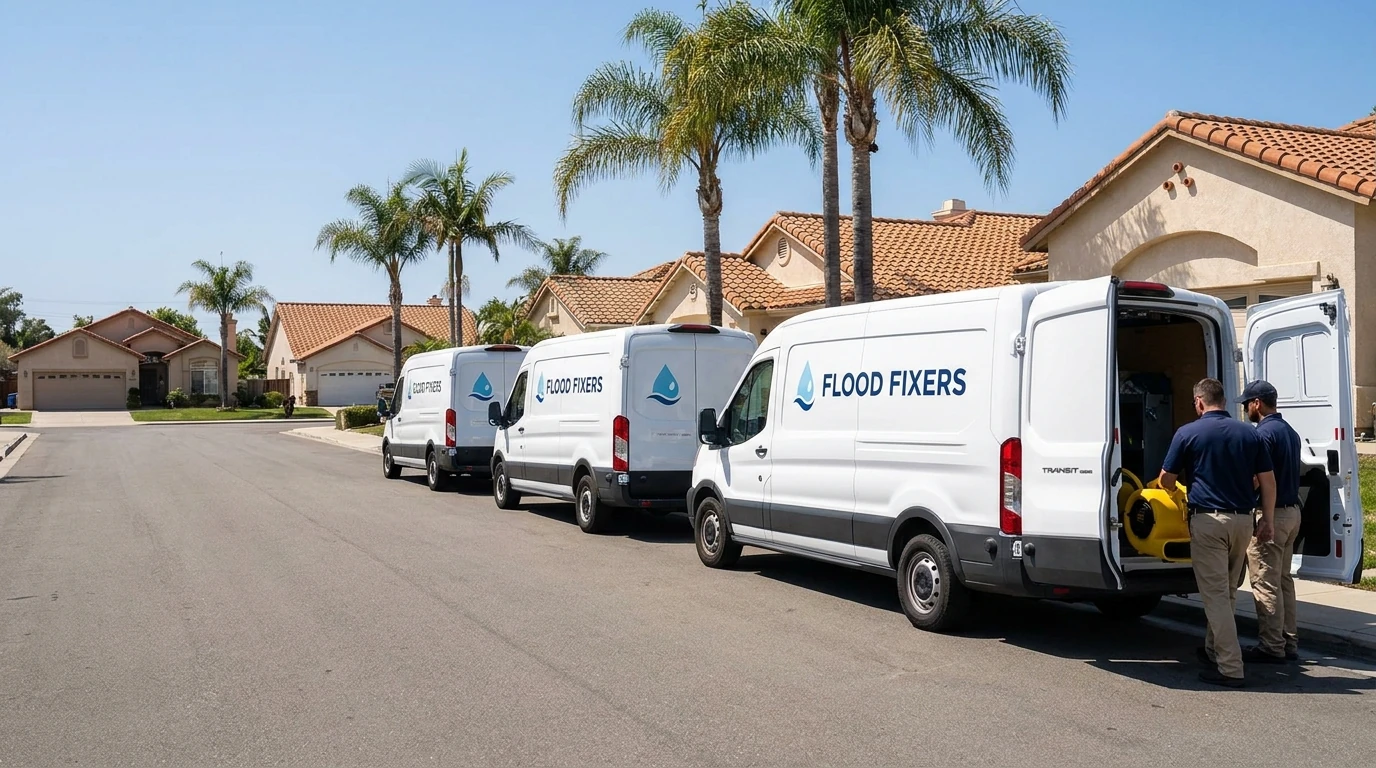
Our technicians are headquartered right here in San Diego and are typically on-site within 60 minutes of your call.
San Diego’s reputation for sunshine and mild winters fools a lot of homeowners into thinking basement flooding is someone else’s problem. It isn’t. When the region’s famously compacted clay soils — especially prevalent across older hillside neighborhoods like Kensington and Normal Heights — become saturated during a rare but intense atmospheric river event, hydrostatic pressure builds against foundation walls fast. Water finds the path of least resistance, and that path is usually straight into your basement. If you’re standing in an inch of water right now, call Flood Fixers at (855) 204-1124. The rest of this page explains what happens next.
Why San Diego Properties Experience Basement Flooding
San Diego averages only about 10–11 inches of rain per year, but that rain rarely arrives gently. When a Pacific storm system stalls over the region, it can dump several inches in 24 hours — more than the drainage infrastructure in some older neighborhoods was ever designed to handle. Homes built before the 1970s in areas like North Park and University Heights often have original clay-tile drain lines that have shifted, cracked, or collapsed over decades. Those lines back up. Sump systems that sat idle for years fail when they’re needed most because the float switch corroded or the pump seized.
Beyond storm events, San Diego’s expansive soils are a year-round factor. The region’s adobe-like clay expands when wet and contracts when dry, which puts constant lateral stress on basement and crawlspace walls. Over time, that movement opens hairline cracks that become water intrusion points. A slow seep can go unnoticed for months until a bigger rain event turns it into a stream. By that point, mold can begin colonizing porous materials in as little as 24–48 hours — which is why response time matters more here than in climates where the air is already dry enough to slow that process.
Our Basement Flooding Cleanup Process in San Diego
When a Flood Fixers crew arrives at your San Diego property, the first 20 minutes are spent on assessment, not just extraction. We identify the water source, classify the contamination level (clean supply line vs. groundwater intrusion vs. sewage backup — each requires a different protocol), and document everything with photos for your insurance claim before a single piece of furniture moves.
Extraction comes next. Truck-mounted and portable submersible units pull standing water from the space while technicians check under stair cavities, behind storage shelving, and beneath any concrete slab sections where water pools invisibly. Once standing water is gone, the real work begins: industrial air movers and desiccant dehumidifiers are positioned to create a drying chamber effect. In San Diego’s relatively moderate humidity, drying timelines for a typical basement run 3–5 days for framing and drywall, though concrete slabs can hold moisture longer and require daily moisture readings to confirm they’re trending correctly. We leave equipment in place and check readings every 24 hours — we don’t pull gear early just to free up inventory.
If flooring, drywall, or insulation has absorbed enough water that it can’t be dried in place, we remove only what’s necessary. Every material removed is documented by square footage and condition, which matters when your adjuster is reviewing the claim.
Response Time and Coverage Across San Diego
Flood Fixers is headquartered in San Diego, which means our response to most of the city is measured in minutes, not hours. From our location, we can typically reach Mission Valley, Downtown, and Mid-City neighborhoods within 30–45 minutes. Areas further out — Rancho Bernardo, Otay Ranch, or the coastal communities near Del Mar — generally see a crew on-site within 60–75 minutes depending on traffic on the 5 or the 163. We run 24/7 operations, so a 2 a.m. call from a ZIP code like 92116 gets the same priority as a noon call.
San Diego Insurance Coordination
Most standard homeowners’ policies in California cover sudden and accidental water damage — a burst pipe, an appliance failure, a sump pump overflow — but exclude gradual seepage or flooding from surface water unless you carry a separate NFIP or private flood policy. That distinction matters enormously for San Diego homeowners, because the cause of your basement flooding determines whether your claim is approved.
We work directly with adjusters from the major carriers active in San Diego County and provide the moisture readings, photo documentation, and scope-of-loss reports they need to process claims efficiently. We also flag early if the damage pattern suggests a coverage gap so you’re not surprised weeks later.
Local Note: San Diego’s Clay Soils and Crack Monitoring
Something that comes up repeatedly on jobs in neighborhoods like Talmadge and Allied Gardens — both built heavily in the 1950s on hillside lots with significant clay content — is that the same storm event that floods the basement also shifts the foundation slightly. We’ve learned to look for stair-step cracking in block foundation walls that appeared or widened after a wet season. That cracking isn’t just a cosmetic issue; it’s a future water intrusion point. We note it in our report and recommend a structural evaluation when we see it, because drying out the basement without addressing the crack means you’ll be calling us again next rainy season.
If your basement is flooded or you’re seeing water seeping through foundation walls anywhere in San Diego, call (855) 204-1124 now. Flood Fixers will have a crew moving toward your address within the hour.
Basement Flooding Cleanup in San Diego: Service Coverage Map
Frequently Asked Questions
How fast can you arrive for basement flooding cleanup in San Diego?
How quickly can Flood Fixers reach neighborhoods like Kensington or Normal Heights for a basement flooding emergency?
San Diego gets very little rain most years — does that mean my basement drying equipment stays on longer because the damage is unusual?
My home in Allied Gardens was built in the 1950s — does that affect how you approach basement water removal?
Does California's distinction between flood damage and water damage affect my insurance claim for a flooded basement in San Diego?
What equipment do you use for basement water extraction and drying, and how is it calibrated for San Diego conditions?